

SafeMinds Risk Intelligence
Every psychosocial hazard managed from identification to control in one place, with a structured record of what has been assessed, decided and actioned.
Hazard to control. Board to line. Strategy to evidence.
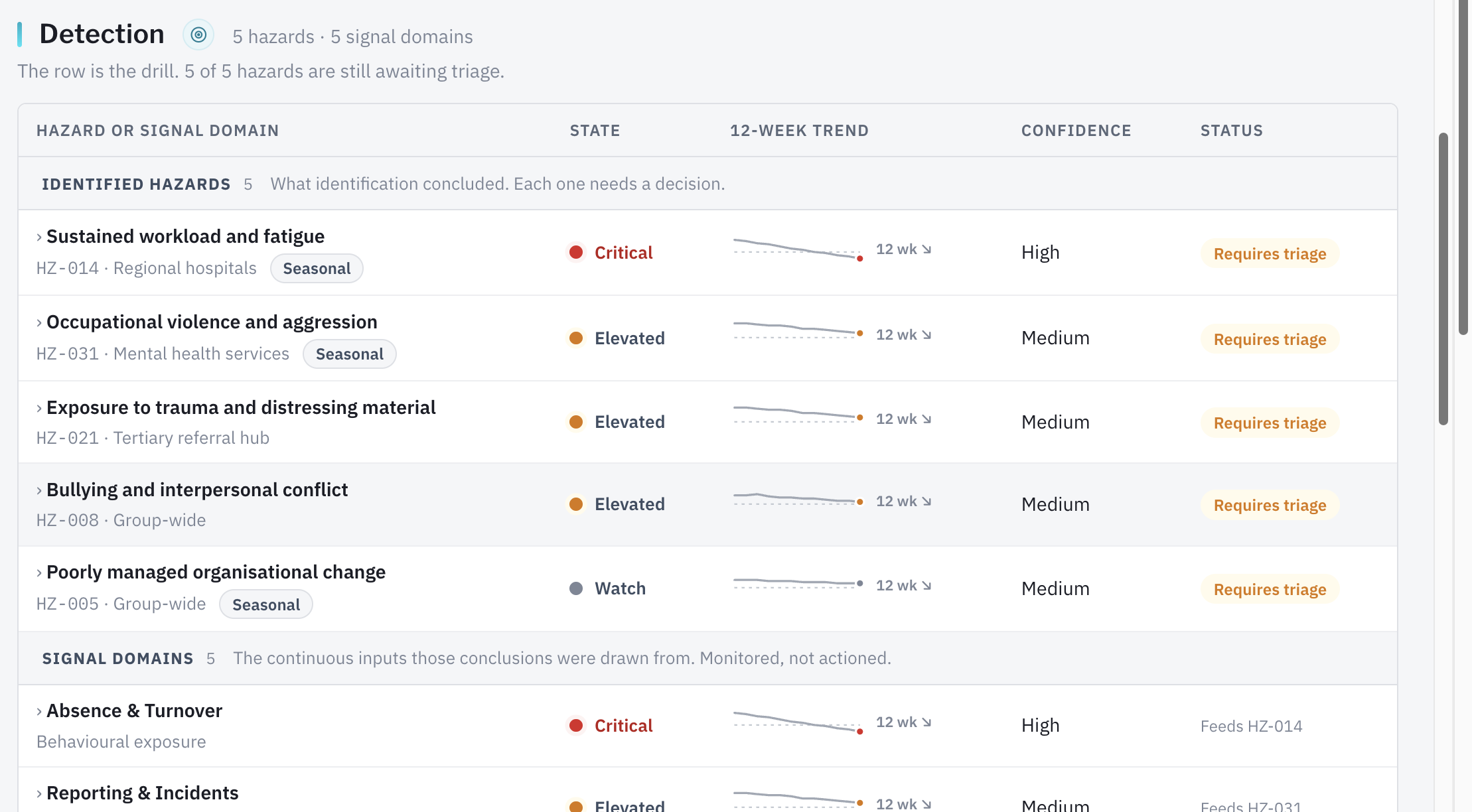
Hazards, and the signals they were drawn from, kept apart.
Each identified hazard carries a state, a confidence rating, and a triage status. The signal domains underneath are monitored rather than actioned. You can always see what a conclusion rests on.
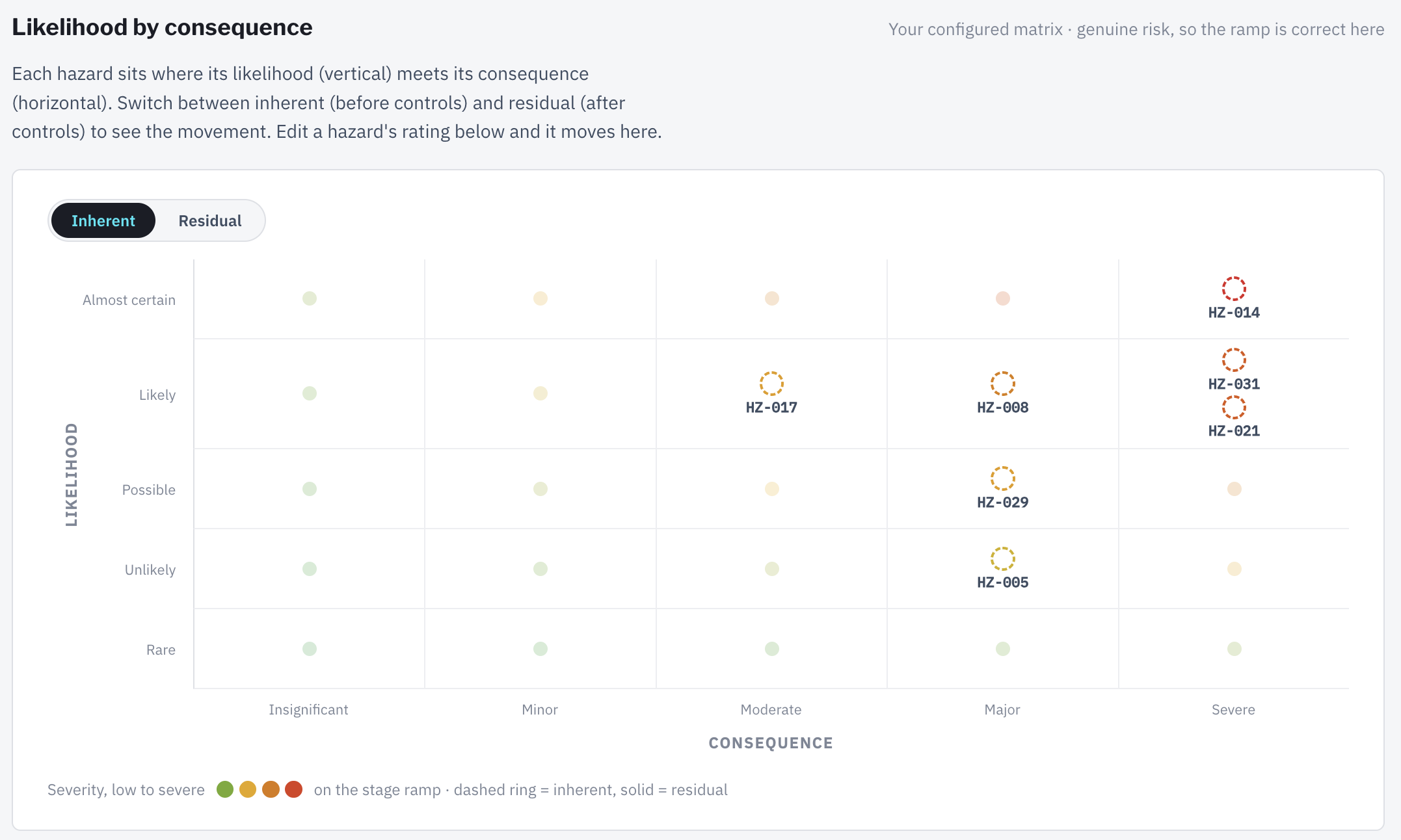
Likelihood by consequence, before and after controls.
Every hazard sits where its likelihood meets its consequence. Switch between inherent and residual to see how far the controls actually move it. Change a rating in the register and the matrix follows.
Every hazard rated twice, with the control gap made explicit.
Inherent and residual severity sit side by side. Control integrity is scored, not assumed. Where a control is partial or missing, the register says so, and that is the record a regulator reads.
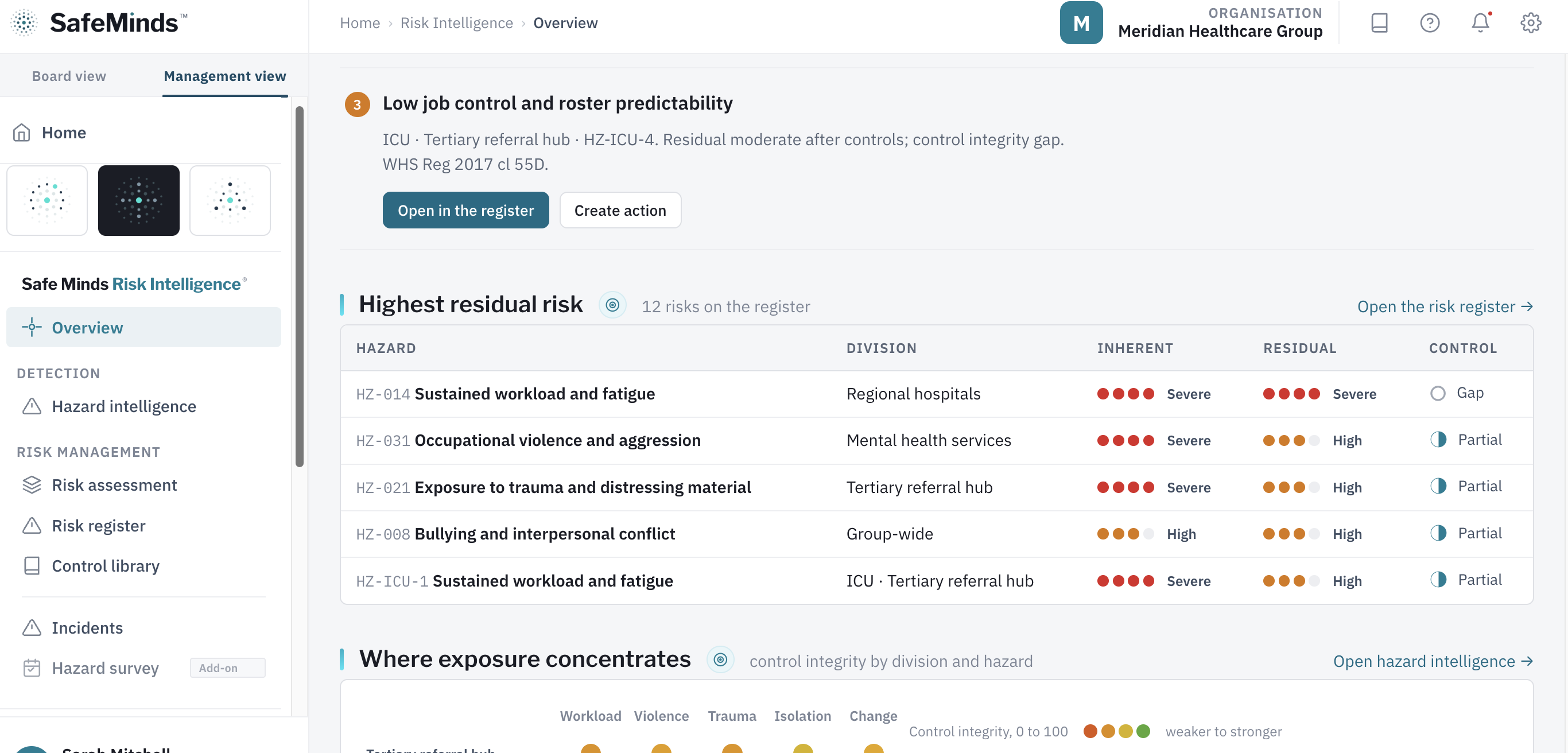
What to do first, with officer and board risk exposure made explicit.
Hazard to control in a single system. Identify, assess, treat, and monitor, with audit-defensible evidence at every step.
Five times longer than other injury types. Median compensation per mental health claim: $67K, the highest of any injury category. Serious claims have risen 161% over the past decade.
InCheq provides valuable insight into the psychological health of our organisation, tailored to the diverse needs of our businesses.
Stop reconstructing. Start managing.
A 30-minute briefing. We’ll show you what your unified risk system would look like.
30 minutes · No prep · Written brief either way